
Over 21 million people in the UK listen to podcasts regularly. With three to five million shows competing for their attention worldwide, the gap between a podcast that builds an audience and one that quietly disappears after seven episodes often comes down to the same handful of avoidable mistakes.
At Outset Studio, with recording spaces in London Bridge, Shoreditch, and Manchester's Northern Quarter, we've seen what separates the shows that last from those that don't. Here are 10 mistakes to avoid before you press record.
Before thinking about content, hosts, or equipment, you need to know who you're making this for. What do they want to hear? What shows are they already listening to? What gap does your podcast fill?
Running a pilot past a small test audience before committing to an entire series is one of the most underused tactics in podcasting. It costs almost nothing and tells you more than any amount of pre-production planning ever could.
The average podcast runs for just seven episodes. The ones that build real followers often have hundreds of episodes. The difference is almost always consistency, the same day, the same format, the same quality, week after week.
The quality of content and the quality of production are different problems, but both matter. Compelling material can survive average production. Average content with poor production survives nothing.
Before you start, look at what your competitors are producing. That's the baseline you need to clear. If they're recording in professional studios with broadcast microphones and 4K cameras, a laptop mic in a spare room won't compete.
Launching five episodes at once improves your chances of appearing in Spotify and Apple Podcasts' New and Noteworthy sections. Beyond that, searchable episode transcripts, timestamps, synopses, and short clips for social are the mechanics that get podcasts found. None of this happens automatically.
Guests who talk over each other, rush through answers, or lose the thread mid-sentence are an editing nightmare. This is one of the most common podcast mistakes teams make when scaling their show. A pre-show meeting to agree on questions in advance, combined with a simple hand signal system during recording, solves most of this.
Guests cancel. Studios become unavailable. Hosts get ill. The podcasts that survive these moments remain the ones with a backup plan: a pre-recorded episode ready to fill the gap, a backup host who knows the show, or a producer who can pivot the content at short notice.
Recording audio only and uploading to Spotify misses most of the opportunity. Video opens YouTube, one of the most-searched platforms for podcast content, and generates clips for Instagram, LinkedIn, and Facebook. A single 45-minute recording session can produce ten pieces of content if it's set up correctly.
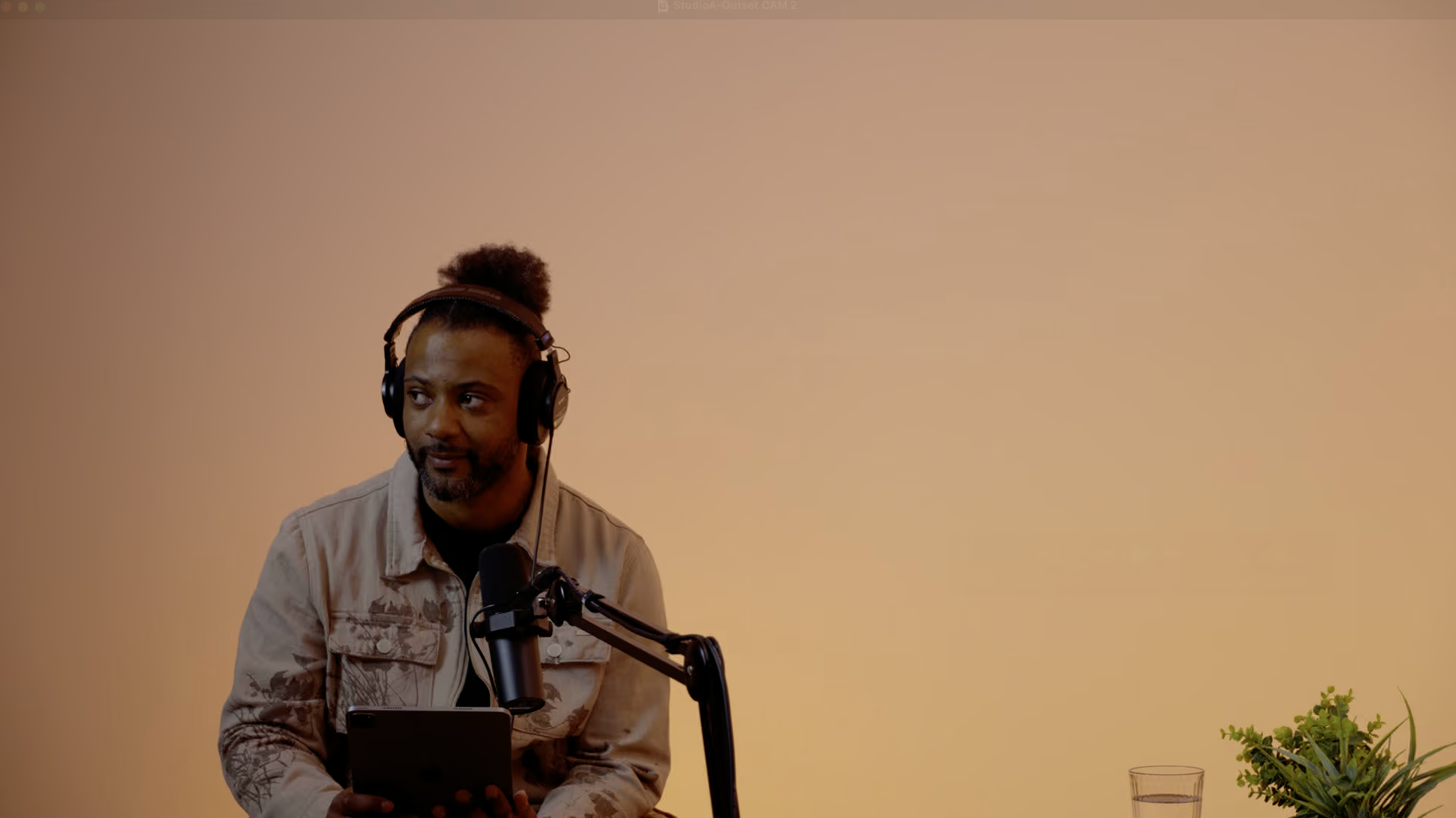
Starting cheap to test the medium is understandable. But poor audio quality is the fastest way to lose a listener who might otherwise have stayed. Broadcast microphones, proper acoustic treatment, and consistent lighting aren't luxuries — they're what professional-sounding podcasts have in common.
Hiring a professional podcast recording studio gives you access to that standard of equipment from session one, without the upfront investment or the learning curve.
Doing everything yourself costs time and money. A professional podcast editor takes around four hours to turn one hour of raw audio into a polished episode. For someone learning as they go, that can be three or four times longer, and the result still won't be the same.
The calculation changes when you factor in the value of your own time. For several creators and brands, booking a studio with optional add-ons — engineer, editing, and social clips — is more cost-effective than managing every element in-house.
Some podcasts find their audience in a matter of weeks. Most take months. The ones that give up after five episodes because the numbers aren't moving rarely find out what they could have built with another twenty.
Avoiding these podcast mistakes and staying consistent is the only strategy that reliably works. Get the basics right, keep going, and the audience follows.
Ready to record your first or next episode?
Check availability